Emergencies do not wait on the safety and security team to finish a meeting, or for a supervisor to return from lunch. When something goes wrong in an office, the very first three minutes set the tone for everything that adheres to. That is why emergency wardens, and especially chief wardens, train for clearness under pressure, not just academic understanding. The Australian units of expertise PUAER005 Run as part of an emergency situation control organisation and PUAER006 Lead an emergency control organisation anchor that ability. Together, they build a bridge in between a created plan and real activity, with communication, discharge, and accountability at the centre.
I have overcome evacuations that started with charred salute, and others set off by faulty switchboards and an actual fire front pushing toward the website. The differences are apparent in knowledge. The consistent, when it goes well, is a warden group that understands who is doing what, just how information streams, and just how to count everyone out without descending right into guesswork. The complying with results are the ones that regularly convert training hours into secure exits and clean handovers to firemans and paramedics.
How PUAER005 and PUAER006 fit together
The PUAER005 training course, often listed as PUAER005 run as part of an emergency situation control organisation, is the foundation for fire warden training. It develops the warden's operational muscle mass memory: elevate the alarm system, analyze, communicate, leave, sweep, report. The system assumes there is a chief warden guiding the wider feedback. In a typical structure, these wardens put on recognizable hats or vests, take care of particular areas, and adhere to the emergency situation reaction strategy with a predisposition for action.
PUAER006, frequently called PUAER006 lead an emergency control organisation, takes the action up to management. The chief warden coordinates details from multiple wardens, works with the Emergency Control Organisation (ECO), chooses regarding partial or complete evacuations, and deals with the interface with the going to emergency situation solutions. The course is much less concerning one person's effort and more concerning organized leadership, delegation, and decision-making with insufficient info. In method, both systems are frequently delivered with each other as a warden course and fire warden requirements a chief warden course, either on the very same day or in sequence.
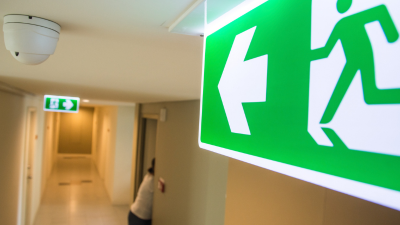
For learners, the distinction feels like moving from playing a placement to calling the play. For organisations, the mix means redundancy: if the chief warden is off-site, a trained deputy can tip up without improvising.
Outcomes that matter: functional interaction under stress
Communication under stress and anxiety needs both a channel and a discipline. PUAER005 drills the basics for wardens: calm voice, short sentences, and regular wording. When a warden says, "Degree 2 clear, two mobility helps, one missing out on from room 204," the phrase is not casual. It is an organized handover that a chief warden can parse within seconds, and it matches the tally board or electronic log in use.
The PUAER006 course adds a layer of controlled tempo. Principal wardens find out to set a rhythm that maintains the ECO integrated. A normal pattern: collect status reports in a dealt with order, repeat bottom lines, verify actions, and assign follow-ups. Because numerous wardens talk simultaneously when alarms are blasting, disciplined turn-taking over the radio issues. Educating strengthens that the chief warden sets priority and tempo. You listen to the distinction on the day: less overlapping transmissions, faster cross-checks, less ambiguity.
It also indicates simple language. Some websites love acronyms, which is a liability during a gas leakage or smoke spread. Courses show wardens to call threats wherefore they are. "Smoke in stairwell An up to level 4" defeats "We have a stratified incursion." The objective is not to excite any individual, it is to get individuals relocating safely.
Evacuation is a decision, not a reflex
Pulling the alarm and clearing a building has prices. If you evacuate a low-risk problem in a medical facility's critical care unit, you might create more danger than you resolve. If you postpone when smoke is spreading in a skyscraper with a pressurised stairwell, you court a different sort of threat. PUAER006 concentrates on decision-making requirements and timing, not rule-following for its own sake.
The best-trained chief wardens utilize 3 filters. First, what is the hazard, and just how is it transforming? Second, what are the obstacles and protections on website, from fire doors to suppression systems to shelter-in-place zones? Third, who is vulnerable, consisting of visitors, service providers, and anybody with movement limitations? The interactions lots adheres to those 3 filters. You will listen to the chief warden require a partial evacuation by area, or for a vertical staging pattern that clears degrees over and below the occurrence floor. You will certainly likewise hear them call a stop to lifts, coordinate protection to fulfill firemans, and verify stairwell condition prior to getting movement.
The PUAER005 program supports this by mentor wardens how to run their locations with minimum hassle. An excellent floor warden reviews the room, not simply the plan. They'll remove out unnecessary instructions and go right to hints: "Leave belongings. Follow me. Use stairwell B. Remain on the left." When someone freezes, they do not say, they direct and relocate. The training highlights that wardens are not bouncers, and they are not amateur firefighters. Their work is regulated emptying, not heroics.

Accountability is more than a roll call
Most individuals think of a roll phone call as the headcount at the assembly area. That is one part of liability, and the least forgiving. The effort beginnings previously. Before a case, the warden team settles on how to track that gets on site. For a small office, it could be a sign-in sheet. For a warehouse, maybe a site visitor management system, service provider permits, and swipe card information. PUAER006 pushes chief wardens to challenge whatever system they acquire. If the information lags the truth of the flooring by half an hour, you can not depend on it alone.
During an emptying, accountability is not a solitary activity. It is a chain: area moves, space flags on doors or verbal checks, reports up to the chief warden, and a put together condition that divides well-known secure, well-known missing, and unofficial. The chief warden's log should show time stamps, resource of details, and unsettled things. This way, when firefighters get here, the handover is crisp: "We have one verified unaccounted individual, last seen in the northwest lab at 10:42, possible shelter-in-place due to chemical hazard. Stairwells A and C clear, B jeopardized by smoke to degree 3."
PUAER005 sustains this with practical sweep strategies and the self-control to never note a zone clear unless you have actually literally inspected it. It also establishes assumptions regarding when to quit searching. There is a line between thorough and negligent. If warm, smoke, or architectural concerns increase past training, wardens back out and report the risk.
Fire warden training needs and the duty of the ECO
Workplaces vary, however the fire warden requirements in the workplace have typical strings. A practical strategy starts with a danger profile. A little single-storey office with twenty staff and two leaves has various needs than a high-rise tenancy relying on base structure systems. Yet both require an experienced Emergency situation Control Organisation with a chief warden, area wardens, and interactions functions defined. The PUAER005 program outfits wardens for day-to-day preparedness and action. The PUAER006 training course prepares the chief emergency warden to collaborate those duties under stress, and to lead workouts that appear gaps.
Frequency of drills issues. Yearly workouts satisfy minimums, however twice-yearly drills are even more efficient, especially when lineup churn is high. Rotate circumstances: a daytime event, an after-hours event with less wardens, a blocked stairwell, a disabled lift, a shelter-in-place regulation for a chemical occurrence. The distinction in between a paper plan and lived ability chooses whether individuals wait at the wrong exit while smoke makes it unusable.
For companies with change work, service providers, or public customers, the fire warden training requirements include customized rundowns. Wardens ought to know how to move groups, exactly how to handle language barriers, and when to utilize aesthetic cues such as arm signals if a system fails. I have actually seen wardens improvisate printed cards with the word leave in big typeface, which showed valuable throughout a noisy plant closure. Training needs to motivate that useful ingenuity, within the limitations of safety and security protocols.
The concern of hat and headgear colours
Visibility matters. In a lot of Australian work environments, wardens wear coloured safety helmets or hats for quick recognition. The colour conventions can vary by site or market, however a typical system is red for fire wardens and white for the chief warden. Where an inquiry appears, it often sounds like, what colour helmet does a chief warden wear? or chief warden hat colour. If your website makes use of a different system, such as yellow for interactions and eco-friendly for emergency treatment, make certain people know it before a drill, not during an emptying. Training must include an aesthetic brief and posters in shared areas.
People also ask about the chief fire warden hat colour or the fire warden hat colour due to the fact that they assume a nationwide standard. The trick is consistency within your workplace. If the chief warden hat adjustments colour after a procurement switch, update signage, the emergency plan, and pierce instructions. The most effective practice is to issue hats to named functions, not just keep them in a cabinet. If the person shows up late and the hat does not, you have actually shed the point of the system.
Building competence: what an excellent course in fact looks like
Look very closely at a PUAER005 course that produces certain wardens, and you will discover high repetition of core jobs with clear feedback. Individuals exercise alarms and announcements, radio usage, door checks, stairwell management, and assembly factor configuration. They take care of side cases: a secured office, a confused site visitor, a mobility-impaired coworker. The instructor runs short, reasonable circumstances that force choices. Not everything mosts likely to strategy, and that is the point.
A PUAER006 training course for chief warden training need to be much more scenario-driven. It needs a command article configuration, a communications table, a website strategy, and a log. Learners should practice assigning tasks to replacement chief wardens, scheduling a 2nd emptying website if the wind shifts, and asking for utilities isolation. They must rehearse the handover to Fire and Rescue with a two-minute instruction and afterwards answer concerns. Several of the most effective sessions I have seen include a curveball, like a warden who falls short to report, or a false alarm throughout a genuine thunderstorm. The class discovers to different signal from noise.
Where the programs share ground is in reflective debriefs. After each situation, the fitness instructor must lead a structured testimonial: what functioned, what lagged, what information got here late, and what will change for the next run. Over 3 or four rounds, efficiency visibly tightens up. This is what emergency warden training should certainly deliver: not confidence for its own benefit, however skills you can prove.
The chief warden's duties, and just how to shoulder them
Chief fire warden duties check out like a checklist up until you do them under pressure. There is method, yes, however there is additionally human leadership. Individuals duplicate the chief warden's tone. If the chief is discombobulated, wardens rush or delay. If the chief is consistent and clear, wardens match it. The chief warden requirements in a big site include succession planning. If the chief is off-site, that steps in? If the replacement arrives ten minutes late, who begins the initial coordination? Construct a deepness chart and drill it.
Chief fire warden duties likewise consist of the peaceful, unglamorous work between events: examining and updating the plan, verifying wardens and replacements by name, straightening with building administration, examining radios and spare batteries, validating evac layouts on walls match the current design, and preparing training for new hires. This is where PUAER006 shifts from program content to behavior. A strong chief warden treats the plan as a living file and the ECO as a team that requires upkeep like any type of other.
Fire wardens are not firefighters, and why that matters
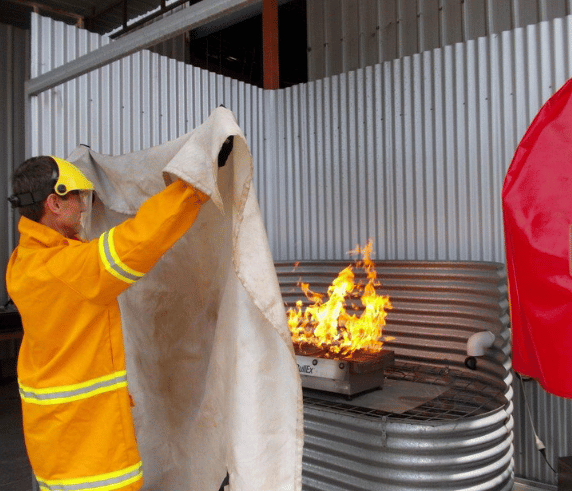
Fire warden training in some cases acquires misconceptions from pop culture. Wardens do not carry hoses. They are not there to abrogate firefighters or to return to a building once evacuated. They might utilize a mobile extinguisher for an incipient fire only if trained, the path behind them continues to be clear, and the risk is acceptable. The choice to attempt a little extinguishment is not part of every scenario, and it should never ever postpone an emptying. Websites that push "we will certainly put it out" mindsets hold back the option to consider risks thoroughly, which is the reverse of what PUAER005 and PUAER006 teach.
An anecdote to show the distinction: at a producing website, a maker captured a little oil fire. A warden with recent training examined the flame, the distance to egress, and the extinguisher type handy. An additional warden started relocating individuals. The very first effort fell short due to an incorrect extinguisher choice. The principal called immediate evacuation and shut the line. Fire services arrived to a clear plant without injuries. The lesson was not about valor, it had to do with self-control. The follow-up transformed extinguisher positioning and signs, and the next drill folded because learning.
Common mistakes and how to blunt them
Communication devices fail. Radios run out of cost. The PA system crackles. The person that always does the head count hires unwell. Training should call these risks and practice workarounds. When I examine sites, the exact same issues appear.
First, insufficient or stale occupant checklists. Fix it with several data resources, and instruct primary wardens to triangulate promptly. Second, assembly points chosen for comfort instead of safety. If your factor is downwind from a filling dock, reconsider it. Third, wardens without authority to get rid of a passage since a manager objects. The ECO needs official power in the plan, backed by leadership. Fourth, mobility-impaired evac plans that count on a single person that functions just weekdays. Build redundancy, and test it. Fifth, building alarm systems that seem different across occupancies. If a high-rise base structure system overlays a tenant system, wardens need to understand what each signal means.
PUAER005 and PUAER006 do not eliminate these risks by magic. They gear up the team to identify them early, log them, and close them.
What the very best websites do in between drills
Competence decomposes without usage. The very best sites run brief refresher courses every quarter, even if formal qualification cycles are much longer. A twenty-minute radio drill, a quick stairwell examination, or a test of the setting up area lighting expenses little and maintains preparedness. Principal wardens routine cross-training, so wardens switch floorings and find out detours. They align with protection and facilities, so the ECO and developing teams share a sight of risks and assets.
Visual aids help. Clear maps at the warden station, a published quick-start sheet for the principal with radio channels and numbers, and a white boards template for case logging all save priceless secs. One logistics firm put a weather vane near the assembly location. Throughout a chemical leak two years later, that vane told the tale much faster than a weather condition application. Details like that come from people that have actually strolled the site and imagined issues in 3 dimensions.
Choosing a provider for warden training
Not all fire warden course carriers coincide. Look for trainers that inquire about your structure design, tenancy patterns, and current events before they begin. If an instructor shows up with a one-size deck and neglects your stairwell pressurisation or your split tenancy, you will get a common session that looks tidy and leaves actual gaps untouched.
For PUAER005 and PUAER006 specifically, ask how much time is allocated to practical scenarios. Anything under one third for PUAER005 and under fifty percent for PUAER006 is most likely light. Inquire about course size. Twelve to fifteen learners per trainer is a convenient array. Over that, people invest more time waiting than exercising. Confirm whether the evaluation is observation-based with clear criteria, not simply multiple selection. Finally, ask about post-course documents: you want a document of proficiencies, attendance, and any type of site-specific findings that need follow-up.
A short pre-incident list that pays off
- Verify ECO lineup: names, functions, backups, and contact numbers are current. Test communications: radios charged, channels validated, and alarm systems functional. Walk the egress: stairwells clear, doors self-close, signs accurate, lighting operational. Update occupant data: staff list, professionals, visitors, and recognized movement needs. Stage the set: chief warden log, site plan, hi-vis and hats, extra batteries, torch.
Keep this to a single page, testimonial it monthly, and connect it to onboarding so brand-new wardens acquire a living system instead of a binder.
Where hat colours fulfill human factors
Colour coding helps, yet only if people seek out and recognize what they are seeing. Throughout one drill, a number of employees neglected a young warden offering correct directions since he did not look like an elderly supervisor. After comments, the site added a brief induction slide: "In an emergency, follow wardens. Red hats - wardens. White hat - chief warden. Their direction overrides business-as-usual." That solitary sentence, repeated at team meetings, made a distinction. Signs work when culture implements them.
The payoff: sharper choices, faster departures, far better handovers
When you put PUAER005 and PUAER006 together with wise practice, three results stand out. Communication comes to be crisp, so noise drops and action rises. Discharge turns into an organized choice, not a panic reflex, which protects both speed and safety and security. Liability ends up being a moving process, from sweep to setting up to handover, instead of a frantic head count at the end.
The remainder of the benefits are subtler. New staff members feel safer due to the fact that they see a system that functions. Contractors respect the site's professionalism and trust. Executives rest a little far better because a close to miss did not become a disaster. This is not abstract. In the last 5 years, I have seen groups halve their discharge times after tightening their ECO and retraining, and I have watched firemens get here to concise, exact rundowns that saved minutes when mins mattered.
If you lead a site, deal with fire warden training and chief warden training as recurring financial investments. If you function as a warden, own your role the way you fire warden training sessions would any type of safety-critical task. If you use the white hat, bear in mind that leadership in an emergency situation is precisely like management on an ordinary day, just louder and quicker. Quality, regard, and follow-through bring you a long way.
Frequently asked, briefly answered
What is the difference in between a warden course and a chief warden course? The warden course, aligned to PUAER005, concentrates on running tasks within the ECO. The chief warden course, straightened to PUAER006, concentrates on leading the ECO and making discharge choices, coordinating communications, and communicating with emergency services.
What colour helmet does a chief warden put on? Numerous workplaces utilize a white helmet or hat for the chief warden and red for wardens. Always follow your website's requirement and make certain everyone recognizes it.
What are the fire warden requirements in the workplace? You need a developed ECO with named functions, documented procedures, normal training and drills, obtainable discharge representations, and a technique to make up residents, including visitors and specialists. The details depend upon your building kind and threat profile.
How commonly should emergency warden training run? Certification cycles vary, yet functional refreshers two times a year and a formal analysis every one to 2 years maintain skills active. Adjustment the scenarios so you do not exercise the very same evacuation every time.
Do wardens utilize fire extinguishers? Only if educated, only at incipient phase, and only when discharge is not postponed and a risk-free egress course exists. The primary task is secure discharge and accountability, not firefighting.
Final thought
An emergency warden course is not a tick-box. It is a rehearsal for a day you hope never arrives. When it does, communication, evacuation, and accountability determine outcomes. The PUAER005 course and the PUAER006 training course provide the structure. Your site's technique gives the side. Put both to work, keep them fresh, and your people go home safe.
Take your leadership in workplace safety to the next level with the nationally recognised PUAFER006 Chief Warden Training. Designed for Chief and Deputy Fire Wardens, this face-to-face 3-hour course teaches critical skills: coordinating evacuations, leading a warden team, making decisions under pressure, and liaising with emergency services. Course cost is generally AUD $130 per person for public sessions. Held in multiple locations including Brisbane CBD (Queen Street), North Hobart, Adelaide, and more across Queensland such as Gold Coast, Sunshine Coast, Toowoomba, Cairns, Ipswich, Logan, Chermside, etc.
If you’ve been appointed as a Chief or Deputy Fire Warden at your workplace, the PUAFER006 – Chief Warden Training is designed to give you the confidence and skills to take charge when it matters most. This nationally accredited course goes beyond the basics of emergency response, teaching you how to coordinate evacuations, lead and direct your warden team, make quick decisions under pressure, and effectively communicate with emergency services. Delivered face-to-face in just 3 hours, the training is practical, engaging, and focused on real-world workplace scenarios. You’ll walk away knowing exactly what to do when an emergency unfolds—and you’ll receive your certificate the same day you complete the course. With training available across Australia—including Brisbane CBD (Queen Street), North Hobart, Adelaide, Gold Coast, Sunshine Coast, Toowoomba, Cairns, Ipswich, Logan, Chermside and more—it’s easy to find a location near you. At just $130 per person, this course is an affordable way to make sure your workplace is compliant with safety requirements while also giving you peace of mind that you can step up and lead when it counts.